
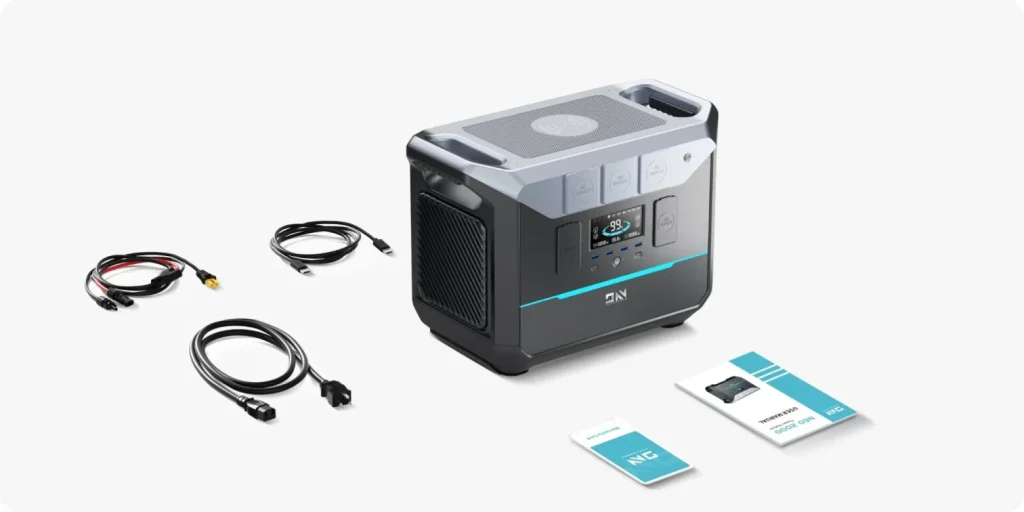
Developing technology in the energy sector has provided many opportunities to create innovative products such as the 1000 watt power station. This type of power station is also considered a portable power station. Because of its impressive capacity, it is also safe to say that is considered a power station of a higher class. While a 300 watt power station is designed to power small devices and appliances, a 3000 watt power station is upwards of 75 pounds, making it impractical. The 1000 watt class stations give you the power and capability to operate most standard household appliances while maintaining an acceptable weight that most people could lift.
Looking ahead to the year 2026, it is clear that these devices have gone beyond just being niche camping accessories. They are essential components of home infrastructure. From home grid failures due to summertime heat waves, to off grid remote work and photography jobs, the 1000 watt power station is an essential and versatile tool in any off grid power system. This guide will teach you everything you need to know about the inner workings of these devices, including the chemistry of the cells, and the actual runtimes of the devices you need the most.
1. Explaining the 1000 Watt Power Station: Understanding Watts and Watt-hours
“Watts” and “Watt-hours” are often some of the most misunderstood terms and this is clearly seen when buyers are confused with these terms. Understanding the two terms is key to understanding your energy needs.
Output Power (Watts)
The “1000 Watts” often refers to the continuous output of the inverter. This is how much power the station can push out each second. Therefore, with a 1000W station, you can plug a 700W coffee maker and it will run just fine. However, when you plug a 1500W space heater, the station’s safety sensors detect it and will shut it down to prevent damage.
Energy Capacity (Watt-Hours)
Most 1000W units also have around 1000Wh (Watt-hours) of energy capacity. This is the size of the “fuel tank.”
• The Math: In theory, a 1000Wh battery can power a 100W device for 10 hours.
• The Reality: In most cases, because of how the inverter works (the “energy tax” you pay when you convert DC battery power to AC wall power), you will lose around 15% of the value. This translates to around 850Wh of energy that is usable.
2. The 2026 Shift in Technology: LiFePO4 and Further
Five years ago, if you purchased a power station, it most likely contained NCM (Nickel Cobalt Manganese) batteries. By 2026, almost all 1000 watt power station competitors will have LiFePO4 (Lithium Iron Phosphate) batteries.
Why LiFePO4 Dominates 1000W Units
Unmatched Longevity: Previous batteries would die after 500 charges. LiFePO4 cells in the Anker Solix C1000 or the EcoFlow Delta 3 Plus are rated at 3000-4,000 cycles. If used every day, you can expect to see 80% of its original capacity in 2036.
Safety Matters: This chemistry is spectacularly more stable. LiFePO4 batteries are non-combustible and can endure the extreme high heat of summer in Texas or California and will not experience thermal runaway.
Value: Yes, the initial price is higher than its competitors, but over the lifetime of the battery, the “cost per cycle” becomes just a few pennies, making it a better long term smarter financial decision.
New solid-state battery technology
In 2026, the first solid-state 1000W batteries are expected to be released. With a battery 1000Wh, solid-state technology can be 30% smaller and lighter than LiFePO4 batteries. Although solid-state batteries will be premium priced in the beginning, they will show great potential for people where weight is the primary concern.
3. Realistic run times from solid-state battery technology
We have looked at the run times for the average 1000W powerhouse in relation to 2026 standards in order to help you prepare for a possible outage or trip.
For Home Emergency Backup
| Appliance | Typical Wattage | Estimated Runtime |
| Full-Size Refrigerator | 150W (avg. cycle) | 12 – 18 Hours |
| Wi-Fi Router & Modem | 20W | 40+ Hours |
| CPAP Machine | 40W | 18 – 22 Hours |
| LED Floor Lamp | 10W | 85+ Hours |
| Laptop (MacBook/PC) | 60W | 12 – 14 Full Charges |
For Outdoor and Professional Use
| Device | Typical Wattage | Estimated Runtime |
| Portable 12V Fridge | 45W | 25 – 30 Hours |
| Electric Grill (Small) | 900W | ~50 Minutes |
| Projector | 150W | 5 – 6 Hours |
| Camera Battery Charger | 15W | 50+ Full Charges |
| Box Fan | 60W | 14 Hours |
4. Here’s How to Know What Your Solar Needs Are
To charge a battery that is 1000Wh, estimate the solar needs at roughly 5 to 6 hours of good sun.
- For a 200W Solar Panel: Your battery will take about 6-8 hours to recharge.
- For 2 panels of 200W (that is 400W total): Your battery will take about 3-4 hours to recharge.
What is the “Pass-Through” Advantage
Most 1000W units that are more expensive allow for pass-through charging. That means that from the sun, this unit can charge the fridge, and any extra energy will charge the battery for the night. This gives you the possibility to stay off-the-grid for a long time.
5. Features That Are Critical and Should Never Be Ignored
In the search for a good 1000 watt power station, the H1 “Total Watts” number will not help you. Ignore that number.
1. UPS (Uninterruptible Power Supply): If the switchover time is between 10ms and 20ms, that is ideal because your desktop computer will not even notice the power has gone out.
2. Port Selection: At the very least, you should have 2 USB-C PD ports that are 100W or 140W because that will allow charging of modern laptops without their power bricks.
3. App connectivity: With modern energy stations users can track their powewr usage with Bluetooth or WiFi connectivity, so you can check how many more hours your energy station can be used while it is charging peacefully in your other room. \n\n 4. Inverter optimization: Budget friendly energy stations house cheap low quality inverters that lose 25% of your power as heat. To get the most usable power, stick to brands such as EcoFlow, Anker, Jackery, or Bluetti. \n\n
6. Frequently Asked Questions:
Q1. Can using a microwave with a 1,000 watt power station be possible? It depends.
A “700W” microwave will actually draw 1100W-1200W from the wall. A 1000W power station with a high “Surge” or “Boost” (ECoflow or Anker) can only run it for a few seconds whereas a standard power station with 1000W will trip the safety breaker.
Q2. Can a 1000w power station be used in a room and be considered safe?
Absolutely. In contrast to gas-powered generators, there are no fumes, and no carbon monoxide will be produced and they are remarkably quiet. It is completely safe to use these generators while sleeping. They can be used as a power source for a CPAP machine or for an electric fan.
Q3: How much does a typical 1000W unit weigh?
You could expect a weight between 24 pounds to 28 pounds (or 11 to 13 kg). This is about the weight of a large bag of dog food- portable for most adults, but you wouldn’t want to hike 5 miles with this on your back.
Q4: Will a 1000W station help me save money on my electric bill?
Most times, no. You would likely lose money the more you use the unit because it would cost more money to use the unit than the unit would save you. But, if you use it with solar, it could help you save money over many years with “peak shaving” (using stored solar power when electricity rates are the highest).
7. Conclusion: The 1000W Category Verdict
The 1000 watt power station is the best you can get for the time being in modern “preparedness- convenience” because it can save your groceries when the power goes out but is also portable to bring to the beach. Because of the changes to ultra-fast charging and LiFePO4 chemistry to be implemented in 2026, these are a 10 year investment for your personal energy security.
Whatever your choice may be, the speed of EcoFlow, ruggedness of Jackery, or the efficiency of Anker, you are buying more than just a battery. You are buying the convenience and freedom to be powered anywhere in the world.
Don’t wait for the next grid failure. Audit your home today. Which five devices are “mission-critical” to you? Total their wattage. You’ll probably see that a 1000W unit is a perfect fit for your needs!