
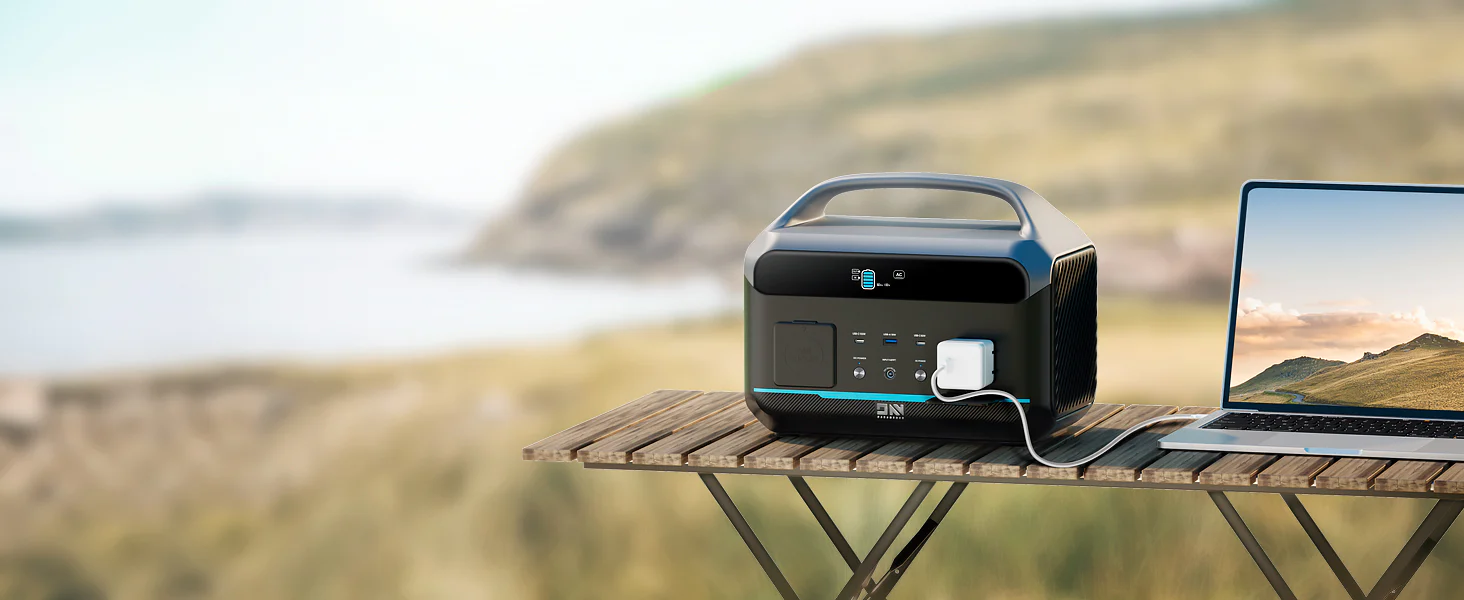
The portable power stations that are 500 watts in capacity have been described in the ever-changing world of off grid electricity to be the ‘sweet spot of the industry’. These power stations are the most versatile in the sense that they cater to the needs of the consumer to be portable and lightweight as well as having the capacity to power the bigger devices such as a fridge that smaller devices such as a phone sized power bank would not be able to accommodate. These devices weigh approximately 12 to 16 lbs and are able to be transported to the beach where they can be used to power a fridge or to be used to run a CPAP machine for the duration of the night.
The years of 2026 and beyond come with a lot of changes and upgrades to the technologies used to create portable power stations. They now have ultra fast charging and smart apps that can control the units. They also are equipped with more complicated batteries that will last longer than most of the users. This guide provides the most comprehensive guide to the reasons why the 500W class of portable power stations is the best in the market. This guide also provides details about the features of the best in class portable power stations and also provides details for each consumer on how they can maximize the amount of money they spent on the portable power station.
Understanding the 500W Class: Carrying Capacity vs. Power Output
When trying to compare different 500 watt portable power stations, it can be challenging to keep track of everything. Being able to separate the “tank size” from the “engine power” is very important.
Output (Watts)
When you see “500 Watts,” this is referring to the AC inverter’s continuous output, and this is what defines what you can plug into it. With a 500W station, you can comfortably run a laptop (60W), a high-definition TV (100W), or a small fan (40W), but you will not run a coffee maker or a space heater, as those typically require 1000W or more.
– Surge Power: Most 500W units can withstand a temporary “surge” (typically 750W-1000W) to help start up motorized small appliances such as blenders or air pump.
Capacity (Watt-hours)
In this class, most units will offer a capacity ranging from 500Wh to 540Wh.
– The Math: A 500Wh battery, in a perfect world, can power a 50W device for 10 hours.
– The 20% Rule: In practice, most inverters will use some of the battery’s power to keep it turned on. In most situations, you can expect roughly 80-85% of the stated capacity to actually be usable for your devices.
Top 3 Rated 500 Watt Power Stations for 2026
There are many reviewed products in this industry. However, for 2026 portable power station reviews, there seem to be a few that beat most of the reviews.
Powerhouse of Durability: The Anker Solix 535 (PowerHouse 512Wh)
Anker, with “InfiniPower” technology, has been a game changer in the mid-range segment of the industry.
• Noteworthy Specs: 512Wh Capacity / 500W Output (750W Surge).
• Customer Feedback: This unit is appreciated because of the LiFePO4 battery that is rated at > 3,000 cycles. With 4 AC outlets and a 60W USB-C Power Delivery, it is ideal for family camping trips where multiple devices need charging all at once.
Modern Work Horse: The EcoFlow River 2 Pro
Although this is technically a 768Wh unit, for most it will still be in the 500W price range, and is this the fastest charging station in its category.
• Noteworthy Specs: 768Wh Capacity / 800W Output (1,600W Surge).
• Customer Feedback: The River 2 Pro will be the best choice if you want speed. In just 70 minutes, it will charge from 0% to 100% at a wall socket. This makes it an ideal choice for last-minute packers.
Classic Reliability: Jackery Explorer 500
Explorer 500 is popular among outdoor purists.
Key Specs: 518Wh Capacity / 500W Output (1000W Surge).
Review: It does not feature EcoFlow’s fast charging or Anker’s LiFePO4 longevity, but its robust construction and integrated solar functionality are legendary.
Real-World Runtimes: What Can You Actually Do?
Numerous customers buy a 500 watt portable power station for emergencies. When it comes to what to expect, far too many have unrealistic expectations for a typical power outage or camping trip.
– Smartphone: 35 to 40 full charges
– Laptop: 7 to 8 full charges
– CPAP Machine (30W-40W): 10 to 14 hours (typically 1.5 to 2 nights assuming heater off)
– Portable 12V Fridge (45W): 10 to 15 hours of runtime (effectively 24+ hours if the fridge cycles)
– LED Lights (10W): 40+ hours
– Starlink V2 (50W-75W): 5 to 7 hours of high-speed satellite internet (fridge [10 to 15 hours of runtime (effectively 24+ hours if the fridge cycles].
Charging your 500W station: Solar vs. Grid
500 watt portable power stations are versatile because they are portable and amenable to recharging away from the grid.
Solar Synergy
By 2026, the majority of 500W units will have an integrated MPPT (Maximum Power Point Tracking) controller. This means you can hook up a 100W or 200W solar panel.
• 100W Panel: Usually it will take 7–9 hours of direct sun to fully recharge your station.
• 200W Panel: A 200W panel can recharge it in 4–5 hours. This means that it can get a full recharge during a sunny afternoon.
DC Car Charging
While you’re driving to your destination, you can use the 12V cigarette lighter port. This is a slow charge (typically 60W-100W) and will take 6-8 hours to fully top off. It’s great for keeping the battery up while you’re driving.
Why Battery Chemistry Matters: LiFePO4 is the Key
By 2026, the most important question to ask will be “What is the battery chemistry?” The older 500 watt portable power station models had Lithium-Ion (NMC) batteries. The newer models, like the listed Anker and EcoFlow models, have LiFePO4 (Lithium Iron Phosphate) batteries.
The Advantages of LiFePO4
Safety: LiFePO4 batteries are much less likely to have fires or experience “thermal runaway”. This means that the batteries are much more stable and less likely to have issues if the battery is punctured, overheated or is subjected to other types of stress.2. Lifespan: Older lithium batteries have a far smaller life expectancy of just 500 cycles. These batteries have over a 3,000 cycle life expectancy. Therefore, they change a 3 year product into a 10 year product.
Safety: Keeping a fully charged LiFePO4 battery is not as dangerous as keeping a fully charged traditional lithium-ion battery.
Maintenance tips for your future
Your 500 watt portable power station is a means of protecting yourself. To make sure your power station is still functioning in a decade follow these three guidelines:
• The 20-80 rule: To avoid cell degradation during storage, keep your battery charge between 20% and 80%. Keeping it fully charged or fully depleted for long periods of time will deteriorate the cells.
• Avoid extreme heat: Never leave your power station in a hot car, especially during a Texas or Australian summer. High heat is the number one killer of lithium batteries.
• Check every three months: Make a calendar entry to ensure you check and turn the unit on every three months. If the battery level is below 40% give it a top off charge.
FAQ
Q1: Is it possible for a 500 watt power station to power a hair dryer? No. Even travel hair dryers typically use 1000 to 1200 watts. Therefore a 500 watt power station will turn on its over load protection and shut off.
Q2: Is a 500W station enough for a full night of CPAP use? Yes, but you need to turn off the heated humidifier and heated tube. Those heating elements can pull 80W or more, and would drain the battery before morning. On “pressure only” mode, it will easily last two nights.
Q3: Can I use it as a UPS for my computer? Yes! Many 2026 models like the EcoFlow River 2 Pro have a UPS mode with <30ms switchover time. This means you can even keep your desktop computer powered on during a slight power flicker.
Q4: Can I take a 500Wh power station on an airplane? No. The FAA and most other international flight rules say lithium batteries must be under 100Wh for carry-on. A 500Wh station is five times over this limit and would have to be shipped ground.
Conclusion: The Ultimate Utility Tool
Being able to power a portable fridge and keep food cold, as well as power lights and keep streams of communication open is real utility. That’s why the 500 watt portable power station has earned it’s place as an essential tool for modern adventurers and homeowners. It’s not a burden to carry.
With technology advancing towards more efficient LiFePO4 cells and quicker charging, the worth of these mid-sized units only increases. Right now, mid-sized LiFePO4 units are the best option whether you are planning your next “can’t wait” trip, or preparing for the next “just in case” trip.
Take a look at your most used camping or emergency appliance. Is it a 40W fan? A 60W laptop? A 45W fridge? If your most important equipment is under 500W, this is the power station for you.