
In the rapidly growing portable power industry, the 300 watt power station serves an important role, acting as the “personal power hub.” While large stationary power units for home backup are as heavy as a suitcase, and small power banks can only keep a phone alive, the 300W class provides a more sophisticated option. At about the weight of a gallon of milk, these units can power a remote office from a park, keep a CPAP running through a short outage, or power a localized campsite, without the bulk of larger systems.
With advancements in technology for the 300 watt power station segment, the 2026 model year looks promising. We are seeing a complete transition to long life cycles in LiFePO4 chemistry and ultra-fast charging rates previously only seen in high end, large capacity models. This guide will take a look at the best 300W models of 2026 and their defining technical specs, as well as provide tips to get the most out of every watt-hour in these power stations compact design.
1. What Are The Possibilities With A 300 Watt Power Station?
To appreciate what a 300 watt power station can do, we have to look at the “engine” (300W inverter) as well as the “fuel tank” (typically from 240Wh to 290Wh capacity).
The 300W Output: The Engine
The 300W rating is the continuous AC output. This means the strength of the flow of energy. In the portable power hierarchy, this is built for small electronics and appliances. You can easily power laptops, 32 inch LED TVs, small desk fans, and even the new Starlink Mini terminals. It is excellent for a digital nomad whom needs to keep their workstation running for 8 hours in a place with no wall outlets.
But the 300W limit is a hard ceiling. Avoid any device with a heating element. Hair dryers, electric kettles, and space heaters usually pull 1200W to 1800W. When you try to plug any of those into a 300W station, the internal Battery Management System (BMS) will detect an overcurrent and immediately trip the safety breaker to stop the inverter from burning up. This is the first boundary to understand for successful off-grid living.The ~250Wh Storage Capacity: Managing the Fuel Tank
The capacity determines the length of time those devices will be operational. By 2026, the benchmark capacity in this category will be in the range of 250Wh to 290Wh. To put this in perspective, consider a typical smartphone battery, which ranges from 12Wh to 15Wh. A 300W station can charge that phone between 20 to 24 times. For a professional laptop which has a 60Wh battery, you will get 3 to 4 charges.
A 300W station is a dependable overnight option for medical requirements, including a CPAP machine. CPAP machines can range from about 30W to 40W. For 7 to 8 hours of therapy, a 280Wh station will be adequate. It can even help you get a full night’s sleep during an emergency situation or while camping as long as the heated humidifier is not used as it consumes a lot of power.
2. The 2026 Tech Standard: Why LiFePO4 is a Must
If you are purchasing a 300 watt power station now, you should only be looking at units that have LiFePO4 (Lithium Iron Phosphate) chemistry. 300 watt power stations have only recently switched from using Lithium Ion (NMC) cells that have a very short lifespan of ~500 cycles. The 2026 market is changing everything with the advent of LiFePO4.
Lifespan and Cycle Count
LiFePO4 batteries have a lifespan of 3,000 to 4,000 full charge cycles before the capacity drops to 80%. If you used your 300W station every day, you would have a fully functioning station until the mid 2030’s. This provides a sense of disposable gadget to a permanent piece of home infrastructure.
Better Thermal Safety
LiFePO4 batteries mean more even heat while operating, leading to increased safety. The Heat management within a 300W station case is a challenge. Because LiFePO4 is more classically stable, the chemical process of, “thermal runaway” is much less likely than previous lithium/gas batteries. Because of this, the risks of a unit igniting while traveling inside a car or being stored within a tent or a tight room or being bumped around or used in hotter environments is basically absent.
GaN Technology
300W inverters are set to adopt GaN technology in 2026. GaN technology is much more efficient than the silicon used in previous technology. This means less heat, better performance, and a smaller size. Because of this, a modern 300W station is about 30% smaller than a unit from three years ago while offering the same, if not more, capacity.
3. Top 300W Models for 2026: Market Summary
Flagship models dominate the 300W market, with each one performing optimally for a certain type of use. Most brands like EcoFlow, Anker, and Jackery still lead the market, but with their 2026 models, the definition of “entry-level” has been shifted.
Most Versatile: Anker Solix C300
A common perception of the Anker Solix C300 (AC version) is that it is the standard for the class category. It has a 288Wh capacity and a solid 300W output with the ability to surge to 600W. What sets it apart is the 140W USB-C Power Delivery ports. Charging high-end laptops can be done even more efficiently via the DC side of the battery than through the AC wall plug.
Most Portable: EcoFlow River 3
EcoFlow’s River 3 is best suited for people on the go. It has the fastest charging speed of all units available in the market, and can go from 0 to 100% in one hour, while plugged to a standard wall outlet. It is also designed with the “X-Boost” feature, which allows it to operate some appliances of up to 600W, but is mainly used for resistive loads, like small heaters or lights.
Jackery Explorer 300 Plus: The Adventure Minimalist
The Jackery Explorer 300 Plus is perfect for the backpack and the trailhead. Weighing just 8.27 lbs and roughly the size of a standard lunch box, it is famously great for durability and its ultra low standby power draw. This allows the unit to sit in your emergency kit for months and give you plenty of charge for when a storm hits.
Charging Versatility: Solar, Wall, and USB-C
The modern user is designed for a 300 watt power station. The versatility of the input in 2026 is just as important as the output.
4. Technical Specs Comparison Table
| Feature | Anker Solix C300 | EcoFlow River 3 | Jackery 300 Plus | Bluetti AC2A |
| Capacity | 288 Wh | 245 Wh | 288 Wh | 204 Wh |
| AC Output | 300W (600W Surge) | 300W (600W Boost) | 300W (600W Surge) | 300W (600W Surge) |
| Battery Type | LiFePO4 | LiFePO4 | LiFePO4 | LiFePO4 |
| Weight | 9.1 lbs | 7.8 lbs | 8.3 lbs | 7.9 lbs |
| AC Recharge | 50 min (80%) | 60 min (100%) | 2 hours (100%) | 45 min (80%) |
| Solar Input | 100W Max | 110W Max | 100W Max | 200W Max |
5. Wall Charging and the ‘One Hour’ Standard
Charging a small station used to take 4-6 hours. Now, the standard is 0-100% in about one hour. This shift has fundamentally changed how people use these units. You can top off your station at a coffee shop or gas station on quick breaks and have enough energy for the next off-grid work day.
Solar Integration: Absolute Energy Independence
Most of these units support a 100W solar panel, meaning with perfect conditions, a 100W panel can recharge a 250Wh–290Wh station in 2.5-4 hours. Since a 300W station has a pretty small capacity, solar is a very effective primary charging option. You don’t need a huge array on your roof; one foldable panel on the dash of your car, or a picnic table, is enough to keep the station powered during sunny days while camping.
Bidirectional USB-C Charging
Charging the power station through its USB-C port is a big trend in 2026. If you have a high wattage USB-C wall charger for your laptop, you can use it to charge the station. This means less gear to carry because you don’t have to take an AC power cable to charge the station. This is great for travelers and hikers because it reduces the gear weight even more.
Our product range also includes a 300-watt portable power station. This is a high-quality unit that meets all the top-tier technical specifications described above. You can find more information by following this link.
6. Real-World Use Cases: Where 300W Shines
The Digital Nomad Workstation
The 300W mobile workstation is ideal `insurance policy` for working from cafes, parks, or fane life setups. It allows you to power your laptop, phone, and hotspot for an entire 8-hour work day. If you are a photographer or videographer, you can use it to charge your camera batteries and drones in the field so you can run your car engine.
The Emergency `Go-Bag`
When going through a storm or natural disaster, the most important tools are communication and light. A 300W unit is the perfect size for an emergency kit. It is light enough for any family member to carry and has enough capacity to keep several phones and an emergency radio running for a week of moderate use. Its silent operation and lack of fumes make it safe to use in a crowded shelter or in a dark living room.
The “Civilized” Camper
A 300 W solar generator will allow you to enjoy the great outdoors without the roughing it part. It is powerful enough to run LED light strings for your tent, and a small fan for those humid nights, as well as a tablet for a late-night movie. And it is easy to carry from the car to the campfire, or to the beach for a sunset session.
7. Maximizing Efficiency: The Pro Tips
Now that you have a basic understanding of your 300 watt power station and its limitations. It is time to learn where the most energy is wasted. Remember that because the battery is small, every single watt counts.
Avoid the “Inverter Tax”
Always use the DC or USB ports instead of the AC wall plug. This is because the internal inverter consumes about 10 to 15 watts of “idle” power just by being turned on. This is known as the “inverter tax”. If you are charging a phone or a modern laptop, use the USB-C port instead. This will help you keep more energy available, and is estimated to increase your available energy between 15 and 20 percent.
Temperature Control
Both extreme cold and extreme heat are dangerous for lithium batteries and will impact their performance and longevity. Below 0°C (32°F), the discharge rate will increase and the chemical reaction will slow down. If you are winter camping, use an insulated bag or warm gear crate to keep the unit inside until you need to use it. If you are summer camping, keep it out of direct sunlight. It will overheat quickly and shut down for safety, and sitting in the sun will guarantee it.
Phantom Drain
Phantom drain is when no port is being used, and the ‘AC or DC’ button is left on. This will still drain the battery. The majority of units in 2026 will still have an ‘Auto-Off’ functionality, but it is a good practice to turn your ports off as soon as your device is charged.
Maintenance – The 10-Year Plan
With good care, you should expect a 300W station to last about a decade. This is because high-quality LiFePO4 cells are used in the construction of the station. It is an investment in your personal resilience.
• Storage at 60%: If you will not be using the station for some time, do not store it at 100% or 0%. The range of 0-100% will result in greater chemical stress. 60% is much better. Be sure to check the station roughly every three months.
• Firmware Updates: Today’s stations interface via Bluetooth or Wi-Fi, and are therefore connected. The manufacturer’s app can be used for firmware updates. Updates can improve the efficiency of the Battery Management System (BMS), in addition to providing new functionality and safety features.
• Cooling: If the unit is used outdoors, dust and sand can accumulate in the vents and fans, especially the cooling fans. A few blasts of compressed air will greatly improve the unit’s ability to cool and operate under load.
FAQ
Q1: Can a 300W station run a coffee maker or a toaster? No, because those devices use heating elements and generally require 1000-1500W. A 300W unit will shut down immediately to prevent a massive overdraw.
Q2: Will a 300W station power a CPAP for the whole night? Yes, but you need to turn off the heated humidifier and the heated hose. Those suck a ton of power. On pressure only mode, a 280Wh station will easily handle 7 to 9 hours of sleep.\
Q3: Can I take a 300W station on an airplane? Generally no. The FAA and other governments impose a lithium battery limit of 100Wh for carry-on items. Since nearly all 300W stations are 200Wh or higher, they are banned on all commercial flights.
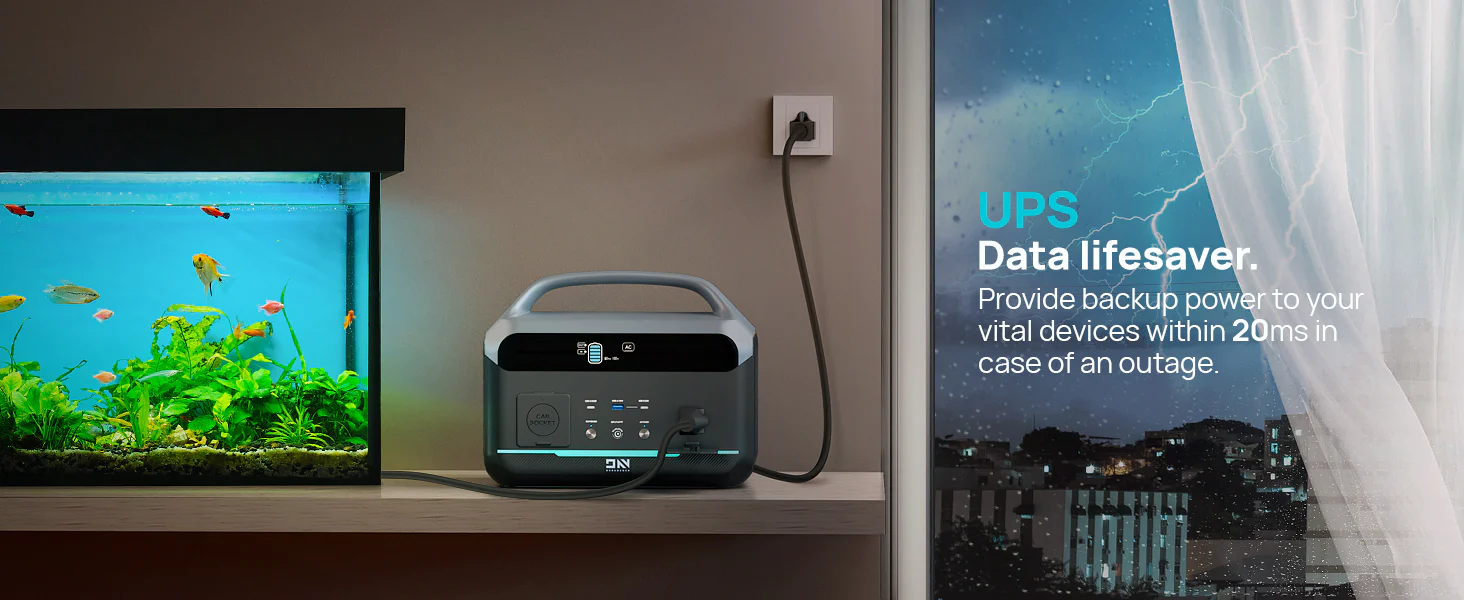
Q4: Is it safe to leave it plugged into the wall all the time? Yes. Most newer units are equipped with a “Bypass Mode” where wall power connects directly to the devices, preserving battery cycles. That means you can use it like a mini-UPS (Uninterruptible Power Supply) for your router or PC.
Conclusion: Small Size, Big Power
The 300-watt power station has redefined what being ‘small’ means. It is an ideal first step into off-grid power as it is safe, silent, and maintenance-free. Be it the speed of the EcoFlow, compactness of the Anker, or the ruggedness of the Jackery, each is buying you the most compact off-grid power station. You get the freedom to work, play and power up anywhere.
Looking into 2026, we see these units as intelligent energy management systems, rather than just ‘batteries’. By putting LiFePO4 safety first and considering your average daily wattage, you’ll always be connected to the grid. You can be as ‘plugged in’ as you want to be.
Final step: check the wattage of your most important devices. If your main tools are your laptop and phone, a 300W station will be the only ‘portable power’ you will ever need!